
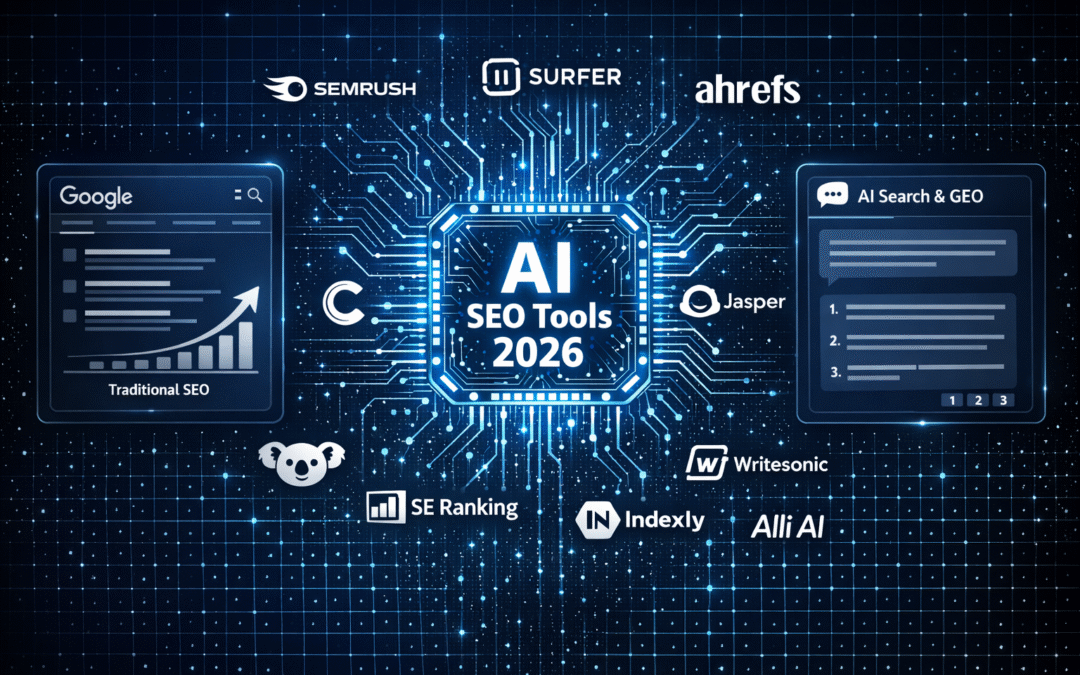
I still remember the moment something felt off.
One of my blog posts was ranking on page one of Google. Traffic was stable. The content was strong.
But enquiries had slowed to almost nothing.
Then a client said something that changed how I look at SEO forever.
“I didn’t click any website. ChatGPT already answered my question.”
That single sentence explained everything.
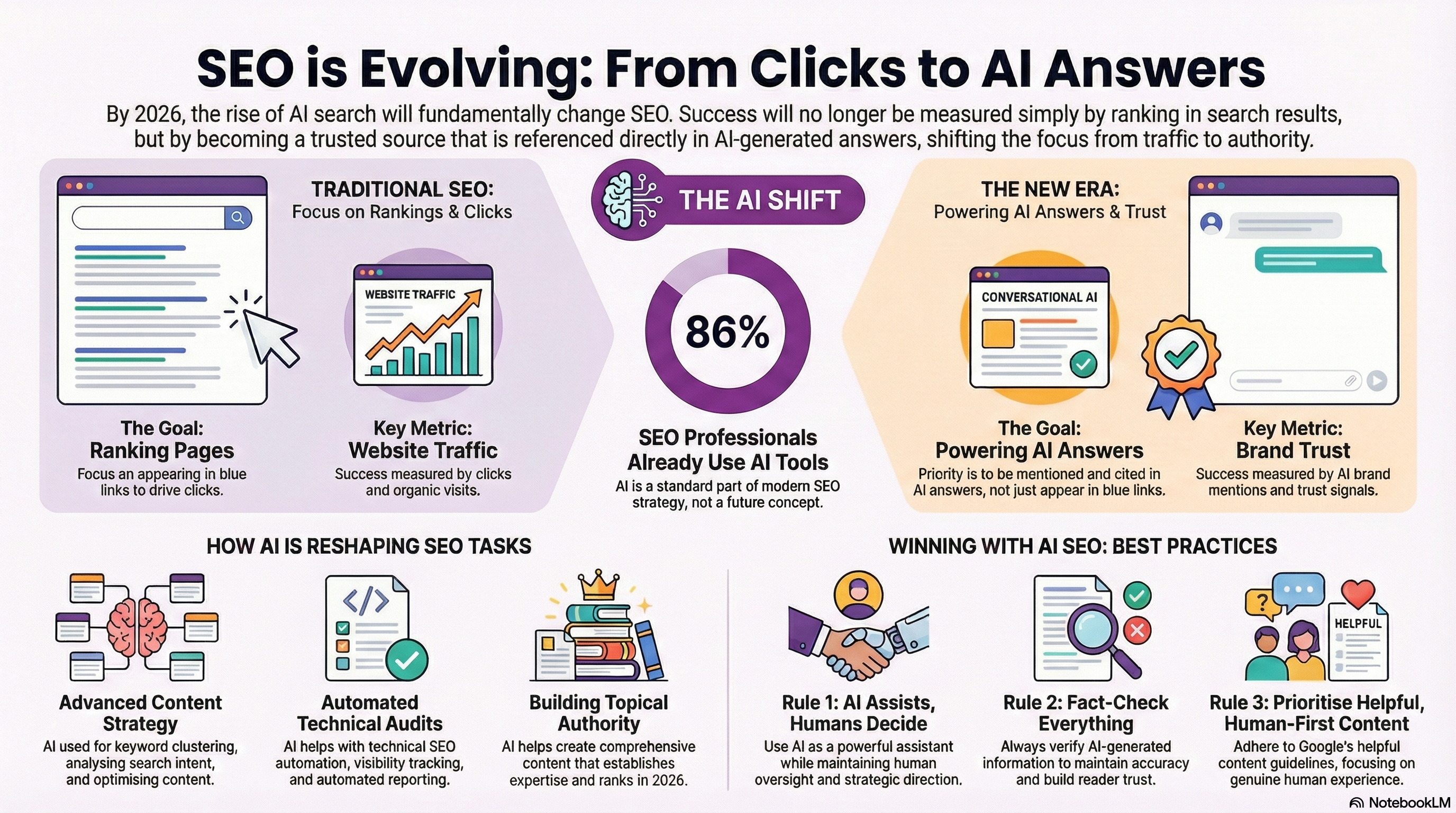
Search was no longer just about keywords, blue links, and rankings. People were asking AI systems direct questions and trusting the first summarised answer they saw.
- No scrolling.
- No tab hopping.
- No comparison shopping.
This shift is what we now call Generative Engine Optimisation (GEO).
For businesses, agencies, and solo consultants like a digital marketing freelancer in Chennai or a digital marketing freelancer in Bangalore, this was a wake-up call.
Ranking on Google alone was no longer enough.
Your content now had to be understood, trusted, and referenced by AI systems. And that has completely reshaped how authority is built, how traffic flows, and how visibility works across the entire digital marketing funnel.
Contents
How AI Is Actually Used in SEO Today
- Not in pitch decks.
- Not in tool marketing pages.
- But in day-to-day SEO work.
The answer was surprisingly simple.
AI doesn’t replace SEO thinking. It handles what humans struggle to do at scale.
Today, AI supports SEO by helping with:
- Keyword research and intelligent clustering
- Content optimisation and intent matching
- Technical SEO audits and issue detection
- Internal linking recommendations
- AI search visibility and brand mention tracking
- Performance reporting and pattern discovery
Most modern ai seo tools combine several of these workflows into one system. That’s where the real time savings come from.
Choosing the Right AI SEO Tool Stack (I Learned This the Hard Way)
Early in my career, I made a mistake most marketers make. I tried every tool.
What I eventually learned is simple:
- Not every SEO AI tool fits every business.
- A freelancer offering digital marketing for dental clinics needs local visibility, trust signals, and clarity.
- An enterprise SEO team managing thousands of pages needs automation, scale, and deep competitive data.
The Framework I Use Before Choosing Any Tool
AI Visibility Tracking
Can the tool show whether your brand appears inside AI answers like ChatGPT or Google AI Overviews?
Traditional SEO Integration
Does it integrate with Google Search Console, GA4, and reliable SEO data sources?
Scalability and Pricing
Is it useful today and still valuable when pages, clients, or locations scale?
Top AI SEO Tools I Actually Trust
These are tools I consistently see used by serious freelancers, agencies, and in-house teams.
1. Semrush
Semrush remains the backbone of modern SEO.
This AI SEO tool is now capable extend far beyond keywords into intent analysis, competitor intelligence, technical audits, and content strategy. It supports decisions across the entire digital marketing funnel.
Best for: Agencies, consultants, advanced SEO professionals
2. Surfer
Surfer completely changed how I evaluate content quality.
It shows why top pages rank by analysing structure, topical depth, and intent alignment. Its topical maps are powerful for niche and local services.
Best for: Bloggers, freelancers, content teams
3. Ahrefs
Ahrefs is still unmatched for backlinks and competitor research.
Its AI-assisted content gap analysis helps uncover what competitors cover that you don’t.
Best for: Competitive SEO and authority building
4. Clearscope
Clearscope focuses on quality over quantity.
It aligns content with real user intent, which is exactly what AI systems look for when selecting sources.
Best for: High-value content and thought leadership
5. Jasper
Jasper speeds up content creation when paired with strong On Page SEO Techniques and human editing.
Used correctly, it boosts productivity without hurting quality.
6. Koala AI
Koala AI combines SERP analysis with long-form content creation, making it easier to produce SEO-aligned drafts quickly.
7. SE Ranking
SE Ranking is one of my favourites for freelancers.
It offers audits, rank tracking, competitor analysis, and AI visibility insights at a practical price point.
8. Writesonic
Writesonic bridges traditional SEO and GEO by tracking how often your brand appears in AI-generated answers.
9. Indexly
Indexly solves a frustrating issue: slow indexing.
It automates URL and sitemap submissions so Google discovers content faster.
10. Alli AI
Alli AI focuses on technical SEO automation, fixing missing tags, broken links, and internal linking issues at scale.
Writing Content for Humans and AI
One mistake I see repeatedly is people writing only for AI.
That never works long term.
The best results come from content that genuinely helps users while being structured clearly enough for AI systems to interpret.
Building Topical Authority
Tools like Semrush and Surfer help build keyword clusters and topical maps.
This works especially well for local services such as digital marketing for dental clinics, where depth and trust matter more than publishing volume.
My AI-Assisted Content Workflow
- Identify real search intent
- Build keyword clusters
- Create an AI-assisted outline
- Add human insights and lived examples
- Apply strong On Page SEO Techniques
Tracking Visibility Inside AI Search Engines
Here’s a hard truth.
Ranking on Google does not guarantee visibility inside AI answers.
AI Mention Tracking
Tools like Writesonic and SE Ranking show how often your brand appears in AI-generated responses.
This compares your AI visibility against competitors and is quickly becoming a core SEO KPI.
Final Thoughts: What Visibility Really Means in 2026
SEO and AI are no longer separate disciplines.
The future belongs to marketers who understand how ai seo tools, traditional SEO, and AI visibility work together across the digital marketing funnel.
AI should always be an assistant, never a replacement.
In 2026, ranking still matters. But being referenced, trusted, and cited by AI is what truly defines visibility.
FAQS
Is AI SEO worth it?
Yes. AI SEO saves time, improves accuracy, and helps scale effort, but it should support strategy, not replace it.
Can ChatGPT do SEO?
ChatGPT helps with ideas and drafts, but it cannot replace professional SEO tools or decision-making.
Which tool is best for SEO?
Semrush is best for all-in-one SEO, Surfer and Clearscope excel in content optimisation, and SE Ranking offers strong value for freelancers.
What are the best AI tools for SEO in 2026?
Semrush, Surfer, Ahrefs, Clearscope, Jasper, SE Ranking, Writesonic, Indexly, and Alli AI remain widely trusted.
What are the 7 types of AI?
Reactive machines, limited memory AI, theory of mind AI, self-aware AI, narrow AI, general AI, and super AI. Most SEO tools rely on narrow AI.
